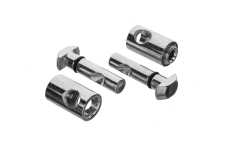
Installing solar panels requires not only profiles and clamps, but also a set of components for connecting, securing and assembling the structure. Mounting plates, rails, brackets, corner pieces and pins help to assemble the system in accordance with the specific features of the profile and the installation conditions.
At DINMARK, you can buy mounting plates for solar panels in bulk, as well as select other components to complete your solar mounting systems. The range includes aluminium and stainless steel solutions for various types of profiles and installation methods.
Types of mounting components in the Dinmark range
The range of mounting components includes parts used to join profiles, create corner joints and secure elements of the solar structure.
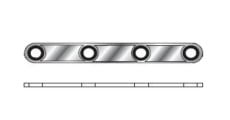
Transition and straight plates
Straight plates are used to join profiles in the same plane. Transition plates are used in joints where it is necessary to connect structural elements with different orientations or to create an additional fixing point.
The choice of plate depends on the type of profile, its geometry and the required connection configuration.
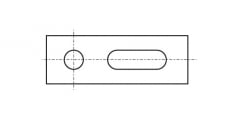
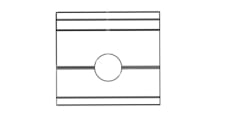
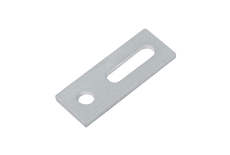
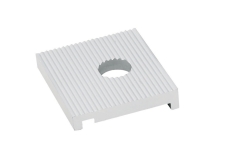
Stamped plates
Stamped mounting plates are manufactured using cold metal forming. They are used as connecting and fastening elements in solar mounting structures.
The shape, holes and dimensions of the plate determine how it is installed and its compatibility with a specific profile.
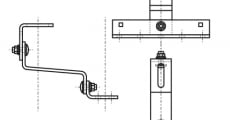
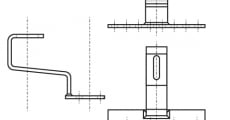
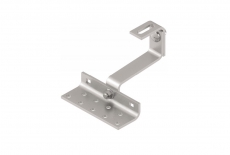
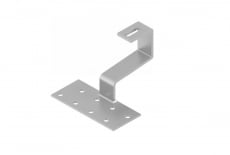
Brackets for solar systems
Brackets are used to form support and connection points in the structure. They can be used when installing profiles, changing the direction of a connection or creating additional fixing points.
If you need to buy mounting brackets for solar systems in bulk, you should consider the material, geometry, dimensions and compatibility with the profile when making your selection.
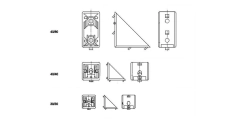
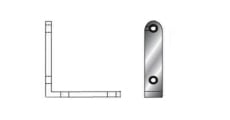
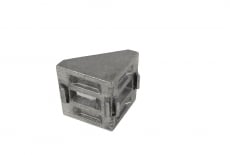
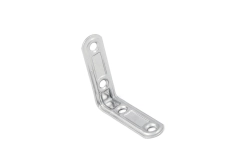
Profile corners
Corner elements are used to join profiles at a specific angle and to form a three-dimensional structure. They are required when assembling frames, support assemblies and other components of solar mounting systems.
To complete profile structures, you can buy solar panel profile brackets in bulk, selecting the appropriate size for a specific profile.
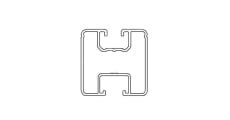
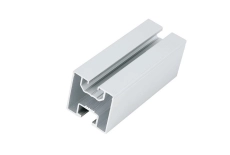
Mounting rails
Mounting rails form the basis for installing and securing solar panels. They are used in structures for roof and ground-mounted installations, depending on the system configuration.
Wholesale solar panel mounting rails are selected based on length, cross-section, material and compatibility with other system components.
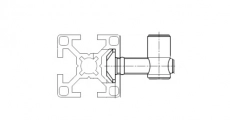
Profile fasteners
Profile fasteners are used to join and secure profile elements in mounting structures. The selection depends on the profile design and the intended method of connection.
For the wholesale assembly of solar systems, profile fasteners for solar panels can be purchased in bulk alongside other mounting components.
Aluminium or stainless steel: which fasteners to choose
The material of the mounting components should be selected taking into account the installation location, the system design and the operating conditions.
Aluminium components are lightweight and well-suited to mounting structures where it is important to reduce the overall weight of the system. They are often used in profile systems for solar panels.
Stainless steel is characterised by its corrosion resistance and mechanical properties. Such components are suitable for assemblies that are exposed to the elements and regularly come into contact with moisture.
When making a choice, it is important to assess not only the material of individual parts, but also the compatibility of all components within the mounting assembly.
Which types of solar panels are our mounting fittings suitable for?
Mounting plates, rails, brackets and supports are used in mounting systems for various types of solar panels. The specific component is selected not so much by the type of panel itself, but by the design of the mounting system.
Important parameters include:
- the type and size of the mounting profile;
- the method of connecting the profile elements;
- the material of the components;
- the geometry of the mounting assembly;
- the type of installation – rooftop or ground-mounted;
- compatibility with clamps and other fastenings.
Therefore, before purchasing, it is worth checking the technical specifications of the profile and the components with which the mounting elements will be used.
Where mounting plates, rails and brackets are used
Mounting components are used when assembling solar installations at various sites. They may form part of roof-mounted and ground-mounted systems, and are used to connect profiles and form individual mounting assemblies.
For installation companies and distributors, it is convenient to source everything from a single supplier: alongside plates, rails and brackets, other components for solar mounting systems can be ordered.
If you require mounting rails and brackets for solar panels, the wholesale price will depend on the specific items, sizes and order quantity.
Benefits of purchasing via the Dinmark B2B portal
DINMARK offers wholesale customers a personal account with features designed to simplify regular purchases.
In the portal, you can:
1️⃣ view current prices and stock levels;
2️⃣ place orders online at any time;
3️⃣ quickly find the items you need by product code;
4️⃣ repeat previous orders;
5️⃣ save products to your own ‘Favourites’ lists;
6️⃣ receive order documents;
7️⃣ use item import to work with your own product coding system.
For companies that regularly purchase a wide range of components, integration via Excel, FTP, YML and API is available. This allows you to automate the management of your product range, prices and stock levels.
Questions and Answers
How much do mounting plates and brackets for solar panels cost?
The cost depends on the type of mounting component, the material, the size and the quantity. For B2B customers, current prices and purchasing terms are available in the DINMARK customer portal. When placing an order, you can select the required items and quantities.
Do aluminium and stainless steel fixings rust on an exposed roof?
Aluminium and stainless steel are highly resistant to corrosion, which is why they are widely used in structures exposed to the elements. However, specific characteristics depend on the grade of material and operating conditions.
For solar systems installed outdoors, it is important to select materials for all components of the mounting assembly that are compatible with one another.
How does a mounting rail differ from a bracket?
A mounting rail is a structural profile to which panels and other system components are attached, either directly or via additional components.
A bracket is a separate connecting or supporting element used to secure, join or reposition profiles. In other words, a rail and a bracket perform different functions and usually operate as part of a single mounting system.
How do you choose the right angle bracket or plate for your profile?
You need to check the geometry and dimensions of the profile, the number and position of the mounting holes, the type of connection and the material of the components. It is also worth considering how the assembly will be loaded and under what conditions it will be used.
If you have any doubts about compatibility, it is best to check the technical specifications of the profile and the fixing elements before placing a bulk order.