

What are flange connections?
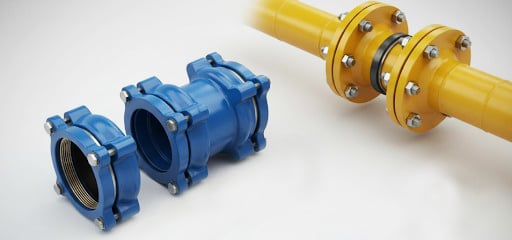 |
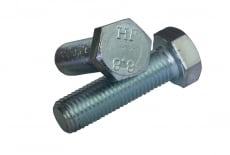
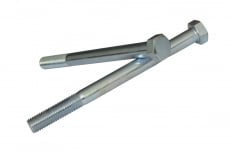
Flange connections— is one of the most reliable and common methods of installing pipelines and industrial equipment, especially where it is necessary to ensure tightness, the possibility of quick disassembly and maintainability of units. Unlike welded joints, flange mounting allows for service, inspection and replacement of individual elements without the need to stop large sections of the system. The basis of the design is made up of flanges, a sealing gasket and hardware - they ensure that two flanges are pulled together with a strictly defined force. The reliability of such a unit depends on the correct selection and installation of fasteners. Bolts, pins, nuts and washers not only connect parts - they create controlled pressure on the gasket, which is responsible for the tightness of the system. That is why high-quality hardware, manufactured according to standards and from appropriate materials, directly affects the safety, service life, and efficiency of pipelines and equipment. |
The role of bolts, studs, nuts and washers in the tightness of the connection
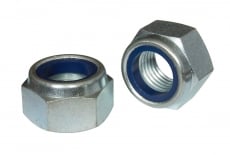
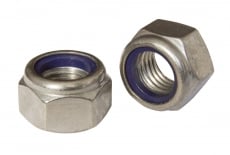
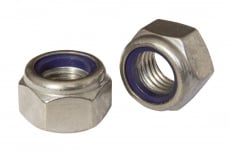
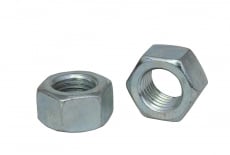
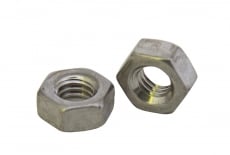
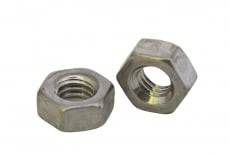
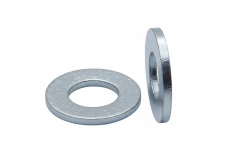
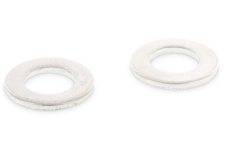
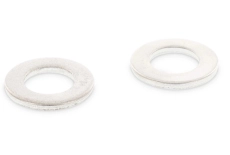
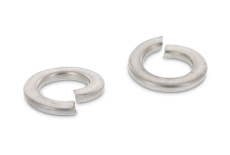
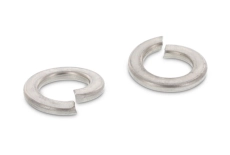
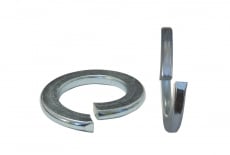
Each element of the hardware kit performs its critical function. Bolts and studs create the main force of tightening the flanges. They work under constant tension, withstand the effects of temperature, pressure, vibration and load changes during system start-up or shutdown. Studs are especially often used on high-temperature and high-pressure pipelines, as they evenly distribute the load along the entire perimeter of the flange. Nuts provide fixation and stability of tightening. It is the quality of the thread and the accuracy of the fit that determines whether the force will be maintained during long-term operation. Washers perform two functions at once: they protect the surfaces of the flanges and nuts from deformation and redistribute the pressure, which helps to avoid creasing and uneven tightening. If at least one of these elements is made of poor-quality material, has the wrong thread or does not correspond to the strength class, the connection may lose its tightness. Therefore, it is a comprehensive approach to the selection of hardware that ensures the stability of the flange assembly.
Main areas of application of flange assemblies
Flanged connections are widely used in all areas where it is necessary to transport liquids, gases or steam under different pressures and temperatures. One of their main advantages is versatility: a properly selected set of flanges and hardware allows you to create reliable units in almost any conditions, from household networks to heavy industry. In water supply and sewage systems, flanged connections provide ease of maintenance and the ability to quickly replace pipes or fittings. In gas networks, they play a key role in creating hermetic joints, where any leakage is critically dangerous. At chemical plants, flanges are used to work with aggressive environments - acids, alkalis, solvents, high-pressure steam. Here, hardware materials play a special role, because they must be resistant to corrosion and temperature deformations. In industry, flange assemblies are used in energy, oil and gas, metallurgy, food production, pharmaceuticals, shipbuilding and industrial fluid transportation systems. They can also be seen in boiler rooms, pumping stations, heat exchangers, filtration units and automation systems. Due to their ease of maintenance, flange connections remain one of the most convenient and effective ways of installing pipelines in any industry.
Criteria for choosing the right fasteners
In order for the flange connection to last a long time and remain airtight, the choice of fasteners must be made taking into account a number of important parameters. The first is the material of manufacture, the right material is important here, for example types of steel. Carbon steels are suitable for standard conditions, but for high temperatures, aggressive environments or elevated pressures, alloyed or stainless steels with increased resistance are required. The second criterion is strength class bolts and nuts. It determines what load the fastener can withstand without deformation and rupture. It is equally important to consider the type and quality of the thread and its see. It must be precise, even, and free of burrs to ensure proper connection with the nut and create the necessary tension. It is also important to have protective coating— zinc, hot-dip galvanizing, phosphating or other options that increase corrosion resistance. For critical components, it is better to choose fasteners with certification, confirming compliance with standards. And the last but not least important factor is the operating conditions. Humidity, temperature, pressure, the presence of chemically active substances, vibrations and cyclic loads form individual requirements for hardware. The correct choice of fasteners minimizes the risk of accidents, extends the life of the equipment and ensures stable, hermetic operation of the flange assembly.
Technical requirements for hardware for flange connections
Technical requirements for fasteners for flange connections are the foundation on which the reliability, safety and durability of any pipeline or industrial equipment are based. Flange hardware operates in difficult conditions: under high pressure, in elevated temperature regimes, in environments with high humidity or corrosive activity. That is why bolts, studs, nuts and washers must meet strict standards that regulate their geometry, mechanical properties, thread, accuracy and surface quality. The requirements cover not only the physical parameters of the products, but also materials, manufacturing methods and mandatory certification. This ensures that the fastener is able to work in specific operating conditions - from low temperatures to heating above 500–600°C, from ordinary water to aggressive acids. In addition, technical standards provide for permissible deviations, heat treatment conditions, coating requirements and quality control in production. In systems where the tightness of the connection is crucial, even the slightest violation in the manufacture or selection of hardware can cause leaks, damage to flanges, breakage of bolts or failure of the pipeline. Therefore, compliance with technical standards is not a formality, but a necessity that guarantees the safety of the entire facility.
Requirements for materials, threads, accuracy and heat treatment
The material from which flange hardware is made must meet the operating conditions of the pipeline or unit. Carbon steels are used for standard conditions, while alloyed and stainless steels are used for high-pressure systems, elevated temperatures, or aggressive environments. Each material must have a certificate confirming the chemical composition and mechanical properties. Particular attention is paid to the thread. It must be perfectly clean, without burrs, sinks, or damage that can interfere with tightening or cause the thread to break. Standardized thread parameters include pitch, depth, profile accuracy, and tolerances. For high-temperature operation, threading is often recommended, as the rolling method under extreme conditions can reduce the strength of the material. Heat treatment is mandatory for most categories of bolts and studs. It includes normalizing, hardening, tempering, or complex heat strengthening methods. Properly performed heat treatment increases the tensile strength, resistance to bending, shock loads and temperature cycles. Insufficient or incorrect heat treatment regime often causes the fastener to fail. All accuracy parameters - perpendicularity, flatness, shape deviation - must comply with the standards. Even a slight curvature of the stud can lead to uneven pressure on the gasket, and therefore - to loss of tightness.
Strength classes and tolerances
Strength class — one of the key parameters for choosing flange hardware. It determines the stress a bolt or stud can withstand without breaking or losing its performance. The most common strength classes are 5.6, 8.8, 10.9, 12.9. Specialized alloys with increased strength and corrosion resistance are used for aggressive and high-temperature environments. Permissible deviations regulate the geometry of the product — from the thread to the landing planes. Standards clearly define the permissible deviation of the height of the bolt head, the evenness of the washer, or the verticality of the threaded rod. Exceeding the standards leads to incorrect distribution of the tightening force, “skew” of the flange, and loss of tightness. High accuracy requirements are not an exaggeration, but a necessity, because flange assemblies often operate under pressure of tens of atmospheres and temperatures of over 300–400°C. Even a millimeter of unevenness can create critical stresses in a metal structure.
Protective coatings and their impact on operation
Sheeting — is an additional barrier between the metal and the environment. Its task is to prevent corrosion, maintain the strength of the hardware and increase the service life of the unit. The most common types of coatings:
- galvanic galvanization;
- hot-dip galvanizing;
- phosphating;
- oxidation;
- nitro-cementation;
- combined protective layers.
Zinc coating is a universal option for water supply, heating and general industrial networks. Hot-dip galvanizing provides a thick layer of corrosion protection, which is relevant for humid or aggressive environments. Phosphating and oxidation are used where not only corrosion resistance is important, but also improving friction characteristics, which has a positive effect on the uniformity of tightening nuts. It is important that the coating is uniform, without peeling, overflows, cracks or cavities. Any defective area can become a corrosion point or lead to the destruction of hardware after just a few months of operation.
Mounting and tightening of flange mounting
| Correct installation and tightening torque flange connections is a key stage on which the tightness, durability and safety of the entire pipeline or unit depend. Even perfectly high-quality hardware, flanges and gaskets will not provide the required result if the installation is carried out with violations. In industry, statistics show that more than 60% of leaks in flange joints are caused by improper tightening of bolts or lack of torque control. Installing a flange assembly is not just installing bolts and nuts. It is a complex of processes: cleaning surfaces, checking the parallelism of the flanges, correctly installing the gasket, placing the bolts in the seats, lubricating the threads and controlled tightening in several stages. Each step significantly affects the final result. Even minor flaws - a drop of dirt, inappropriate lubricant, uneven pressure - can lead to depressurization or mechanical damage. During installation, it is important to follow the manufacturer's recommendations, standards and requirements for a specific type of equipment. This is especially true for components operating under high pressure, in systems transporting steam, gases or toxic media. In such areas, even a minor installation error can result in an emergency. That is why the correct tightening sequence, the use of a torque wrench and careful preparation are not a recommendation, but a mandatory technological process. |  |
Preparation of flanges and hardware before installation
The preparatory stage is the basis of high-quality installation. The flanges must be clean, without remnants of old gaskets, corrosion, scale or mechanical damage. Even a small corrosion spot on the mating surface can cause micro-leaks. If the surfaces are rough or uneven, it is recommended to sand them or process them in accordance with technical standards. The gasket also needs to be inspected. It must be smooth, without cracks, micro-tears or deformations. Never use gaskets that have already been compressed in the old connection - they will not provide tightness when re-installed. Before installation, hardware is inspected for defects: scratches, chipped threads, bends or visible signs of corrosion. Particular attention is paid to the thread. Bolts and studs with defective threads will not only not provide the required pressure, but can also break during tightening, which causes expensive repairs. Thread lubrication is another important element of preparation. Special lubricants reduce friction and help achieve precise, controlled tightening torque. In addition, the lubricant prevents the threads from seizing during operation, which greatly facilitates subsequent disassembly of the assembly.
Cross-tightening scheme and three-step method
The correct tightening sequence is the key to uniform gasket compression. If the bolts are tightened in a circle or without a clear pattern, the flanges will “lead” and the gasket will be compressed unevenly. This poses a risk of gaps, microcracks, leaks or deformation of the joint. The most effective method is a cross pattern - the bolts are tightened opposite each other, moving diagonally. The more holes in the flange, the more complicated the pattern, but the principle remains the same: uniform pressure at all points.
Tightening is performed in three stages: The first pass - tightening by 30–40% of the calculated torque. The second pass - tightening to 60–70% of the torque. The third pass - achieving the full nominal torque. This approach allows the gasket to sit evenly between the flanges and avoid skewing. Experience shows that the three-stage method reduces the risk of leakage by almost half compared to a single tightening. The tightening torque itself is determined by the bolt material, flange type, operating conditions and standard recommendations. In critical units, the use of dynamometric or hydraulic tools is mandatory to achieve accurate clamping force.
Typical mistakes and their consequences
The most common mistake is uneven bolt tightening. This leads to flange misalignment and uneven gasket compression. As a result, micro-leaks develop, which over time can turn into emergency situations. The second common problem is over-tightening. Most installers believe that “it is better to over-tighten”, but this is a wrong strategy. An over-tightened bolt can stretch, lose elasticity or crack. In addition, excessive pressure damages the gasket and reduces its service life. Insufficient tightening force is no less dangerous. In this case, the bolts loosen under the influence of vibration and temperature cycles, causing loss of tightness and displacement of the flanges. Another mistake is the lack of lubrication on the thread, which makes it difficult to achieve the required torque and can cause the bolt to bend or jam. The use of uncertified hardware is also included in the list of critical risks. Each of these mistakes can lead to expensive repairs, accidents, and long downtimes. That is why following the installation rules of flange connections is key to their reliability.
Tools and quality control of flange connections
The quality of tightening a flange connection depends not only on the correct choice of hardware and the performance of installation work - the tool used during the installation of bolts and studs plays a huge role. Even the most advanced flanges and gaskets will not ensure tightness if the tightening is done "by eye", without controlling the effort and observing the technological sequence. Modern industrial facilities have long since moved away from the practice of manual tightening without measuring the torque. Instead, tools are used that guarantee accuracy, repeatability and the possibility of checking after installation. The quality control of a flange connection takes place in several stages: visual assessment, checking the tightening torque, tightness testing and subsequent periodic inspection during operation. In complex systems where high temperature, pressure or aggressive environments operate, post-installation control is a mandatory regulatory procedure. Often, it is the non-observance of the torque or incorrect use of the tool that causes accidents that cost enterprises significant costs. Thus, tooling and quality control are not an auxiliary process, but a full-fledged part of the technology that ensures the safety and long service life of flange assemblies.
Torque wrenches and hydraulic tensioners
A torque wrench is the main and indispensable tool for flange connections. It allows you to set the exact tightening torque for each bolt. Without it, it is almost impossible to ensure uniform gasket compression and the same load on the flanges. There are several types of torque wrenches: mechanical, electronic and hydraulic. Each of them is used for a certain range of torques. For large diameter flanges, high-pressure pipelines or heavy industrial equipment, hydraulic bolt tensioners are used. The principle of operation is simple: the tool creates axial tension on the bolt, after which the nut is tightened without applying excessive torque. The advantage of the method is maximum accuracy, no distortions and a significant reduction in the risk of thread damage. In situations where it is necessary to work with very high torques (for example, in the oil and gas industry), torque amplifiers are used. They provide the necessary torque without excessive physical effort on the operator, which increases the safety and accuracy of installation.
Using thread lubricants
Grease is an essential element of high-quality installation. It reduces friction between the threads, ensuring more accurate achievement of the nominal tightening torque. Without it, the indicators can be distorted by 20–40%, which is critical for flange assemblies. In addition to tightening accuracy, grease also performs a protective function. It prevents thread fouling, corrosion, and difficulties during dismantling. In high-temperature systems, special extreme pressure greases are used that can withstand heating within 600–800°C and do not lose their properties even in difficult operating conditions. In chemical and petrochemical environments, greases resistant to aggressive substances are used. An incorrectly selected grease can react with the bolt material or the medium in the pipeline, which will lead to damage.
Torque check and tightness check after tightening
The final stage of installation is a check of the correctness of the tightening and a leak test of the flange connection. After performing the three-stage tightening scheme, the bolts are checked again with a torque wrench to ensure that they are all under the same load. After the mechanical check, a leak test is carried out. Its method depends on the type of system:
- hydraulic tests (high pressure);
- pneumatic tests;
- testing with leak indicators;
- thermographic control;
- visual inspection during start-up under load
The quality of this stage determines whether the system will operate without accidents and maintenance for a long period. In responsible areas - chemistry, oil refining, gas networks - tightness control is a mandatory condition before putting the facility into operation.
Flanged joints are one of the key elements of pipeline systems in the water supply, gas industry, energy, chemical and petrochemical industries. Their reliability directly depends on the quality of hardware — bolts, studs, nuts and washers — as well as on compliance with technical requirements and installation rules. Properly selected fasteners of the appropriate strength class, made of steel that can withstand operating temperatures and pressure, ensure stable operation of pipelines and eliminate the risks of leaks or accidents. Modern standards regulate everything: from thread accuracy and permissible deviations to heat treatment and protective coatings. However, even the highest quality hardware does not guarantee tightness if tightening is performed incorrectly. That is why it is important to use torque wrenches, hydraulic tensioners and special lubricants, as well as strictly adhere to the cross sequence and three-stage tightening scheme. Competent installation and proper tightness control after installation allow you to extend the service life of the equipment, minimize repair costs and ensure personnel safety. High-quality hardware for flange connections is not just a component, but an important element of engineering safety that determines the efficiency of the system as a whole.