


High-strength fasteners are hardware designed for high static and dynamic loads, vibrations and critical components where a "regular" bolt is not enough. They are used in metal structures, mechanical engineering, construction, equipment repair and anywhere where connection security is critical. Below is a practical guide that will help you understand which high-strength fastener you need and how to avoid making a mistake when ordering.
What are high-strength hardware and how do they differ from standard ones?
The term "high-strength fasteners" usually refers to bolts, nuts, washers, studs, and other elements made of carbon steel and heat-treated to provide increased strength (yield strength and temporary resistance to rupture). The main difference is the ability to withstand higher loads without plastic deformation and failure, as well as more predictable operation of the connection under tightening.
For critical components, not only the “strength of the bolt” is important, but also the consistency of the bolt-nut-washer pair, the correct selection of the strength class and the control of the tightening torque. That is why this type of fasteners is often sold in sets, and in projects they require confirmation standards (DIN/ISO) and batch certification.
Main types of high-strength fasteners and their features
|
Type of high-strength fastener |
Description |
Strength class |
Coating |
Corrosion resistance / features |
|
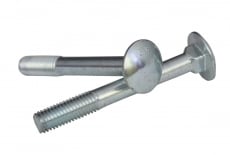
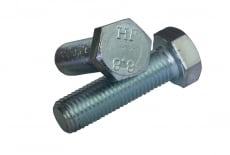
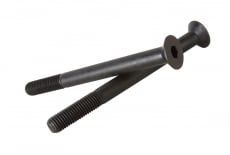
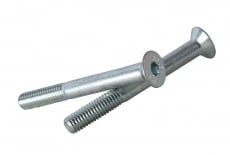
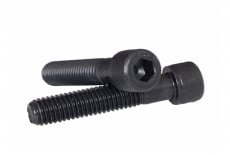
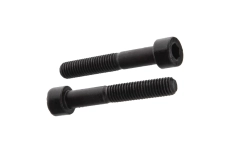
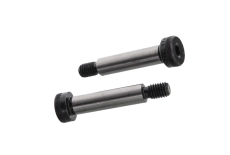
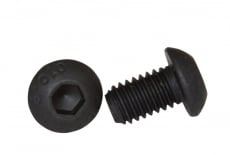
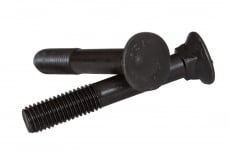
High-strength bolts (hexagon, with flange, with internal hexagon) |
The basic element of a power connection, used in metal structures, mechanical engineering, construction |
Strength classes 8.8, 10.9, 12.9 |
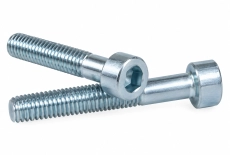
Galvanized (galvanic, hot), phosphated, oxidized |
Durability depends on the coating: hot-dip galvanizing - for outdoor conditions; zinc lamella - increased corrosion protection; phosphating - for indoor use |
|
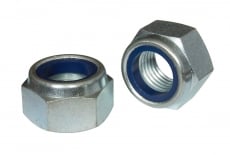
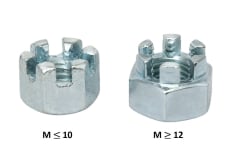
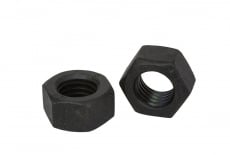
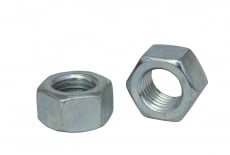
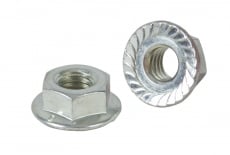
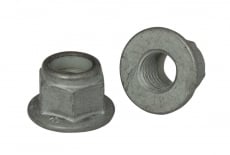
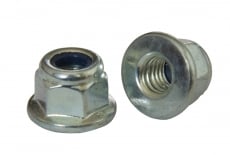
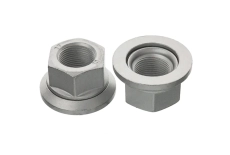
Nuts high strength |
Used in conjunction with bolts of the appropriate grade to ensure a secure threaded connection |
Strength classes 8, 10, 12 |
Galvanized, phosphated, zinc-lamella |
Selected according to bolt class; when used in aggressive environments, a reinforced anti-corrosion coating is recommended |
|
Washers (regular, enlarged, spring, spherical) |
Distributes loads, protects the surface and prevents loosening of the connection |
High-strength steel, hardness 200–300 HV |
Galvanized, phosphated, hot-dip galvanized |
Protects contact surfaces from damage and corrosion; hot-dip galvanizing provides better protection in humid environments |
|
Threaded Pins |
Headless threaded rods for critical and reusable connections |
Strength classes 8.8–12.9 |
Galvanized, oxidized, phosphated |
Used in harsh operating conditions; additional corrosion protection is recommended for outdoor installation |
|
High-strength fastening kits |
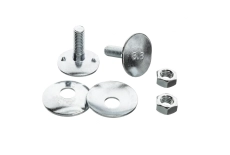
Ready-made solution: bolt (screw or stud) + nut + 2 washers |
Strength classes 8.8, 10.9, 12.9 |
Comprehensive coverage according to operating conditions |
Ensures uniform operation of all elements; used in bridge construction, industrial and metal structures |
Strength class marking
|
Strength class is a marking on the bolt head (or in the documentation) that indicates the mechanical properties. The most common in industry are 8.8, 10.9, 12.9. The first number is related to tensile strength, the second to the ratio of yield strength to tensile strength. |
|
High-strength steel fasteners: grades, coatings and corrosion resistance
Orfasteners are usually made of steels that lend themselves well to heat treatment. In practice, something else is more important for the buyer:environmental compatibility(moisture, reagents, sea air),coverage requirements, temperature regimeandthread corrosion risks.
If the connection is operated outdoors or in damp rooms, it is worth immediately applying protection: galvanizing, zinc-lamella or other industrial coatings. For dry indoor conditions, standard protection may be sufficient: galvanic zinc or phosphating (depending on the task and standards).
Common coatings
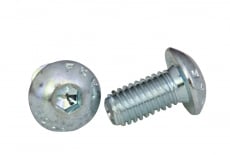
Zinc— a universal coating for most standard applications. Provides basic corrosion protection, a neat appearance and good availability. Layer thickness is usually 5–15 microns. Suitable for indoor or moderate humidity environments.
Hot zinc— is applied by immersing the product in molten zinc. Forms a thick protective layer (approximately 40–80 microns), which provides high resistance to atmospheric corrosion. The optimal choice for external structures, metal structures, supports, fences and industrial facilities.
Zinc shawl— a modern protection system based on zinc plates in a non-electrolytic layer. Provides high corrosion resistance even with a small coating thickness. Often used in mechanical engineering, the automotive industry and structures with increased requirements for durability and stability of the coefficient of friction during tightening.
Zinc-nickel black— zinc-nickel alloy with additional black passivation. It is characterized by increased corrosion resistance (significantly higher than conventional galvanizing) and a decorative dark coating. It is used in assemblies with increased durability requirements, in engineering and industrial equipment.
You can read about these types of coverage in the article “New types of coatings: black zinc cloth / black zinc-nickel”.
When selecting a coating, also consider the layer thickness and the effect on the thread (especially for small steps and precise fits).
Where high-strength fasteners are used: construction, metal structures, mechanical engineering
Fasteners are actively used in the construction of metal frames for shopping centers, warehouses, hangars and production complexes. In bridge construction, they provide rigidity and stability of the structure under significant dynamic loads.
Areas where high-strength fastening is not an “option”, but a requirement:
- Metal structures and frames: column/beam assemblies, trusses, base plates, assembly joints.
- Mechanical engineering and repair: power elements, vibration components, units and frames.
- Industrial equipment: frames, flange connections, heavy mountings on supports.
- Service and installation: when repeatability of tightening torque and minimal risk of "sag" of the connection are important.
In these tasks, an error in strength class or selection of the "wrong" nut often costs more than the difference in the price of the hardware - due to downtime, rework, or safety risks.
How to choose the right high-strength fasteners for the task and what to order: a short checklist for purchasing
The selection of a high-strength fastener begins with an engineering calculation. The type of load is taken into account - static or dynamic, possible vibrations, temperature conditions and operating conditions. No less important are the thread diameter, bolt length and type of connection.
It is also necessary to consider anti-corrosion protection. For external structures, it is advisable to use hot-dip galvanizing or special coatings that extend the service life of the product. In industrial environments with high humidity or aggressive substances, additional corrosion protection should be provided.
To quickly and correctly select fasteners, answer 6 questions:
- Load and operating mode: static or with vibrations/shocks
- Project standard/requirement: DSTU; EN; DIN/ISO, need a set or separate items
- Size: diameter, length, thread pitch and length, head type.
- Strength class: 8.8 / 10.9 / 12.9 (or other according to specification).
- Material and coating: dry/humid/outdoor, increased corrosion resistance required
- Bolt-nut-washer pair: are the elements consistent with each other (especially for responsible nodes)
If you are preparing an application, it is most convenient to immediately indicate:product type + standard + size + strength class + coating + quantity(for example: hex bolt, M12×60, class 10.9, zinc plated, thread pitch 1.5;, 200 pcs.). And if in doubt, it is better to send a drawing/specification: we will select a high-strength fastener based on it.
Advantages of high-strength fasteners compared to standard ones
The main advantage is the ability to withstand significantly higher loads without losing geometry and functionality. High-strength fasteners allow you to reduce the number of connection points, optimize the design and increase its rigidity.
In addition, such products demonstrate better resistance to metal fatigue, which is especially important for objects with constant vibrations. The use of certified high-strength bolts and nuts ensures compliance with building codes and reduces the risk of accidents.
As a result, the right choice of high-strength fasteners is an investment in the durability and safety of the structure. For a professional approach, it is important to focus on strength classes, production standards and proven material quality, because it is these factors that determine the effectiveness of the bolted connection in the long term.
FAQ
1. What strength classes are most common for high-strength fasteners?
The most common strength classes are 8.8, 10.9 and 12.9. The higher the class, the greater the load the fastener can withstand, so the choice depends on the project requirements and operating conditions.
2. Which coating is better for corrosion protection?
For outdoor use, hot-dip galvanizing or zinc-lamella coating is optimal. For indoor use, electroplating or phosphating is sufficient.
3. Why is it important to select a nut according to the bolt class?
The nut must match the strength class of the bolt so that the threaded pair works correctly and withstands the design loads without deformation or thread breakage.








-6583.jpg)
-13045.webp)