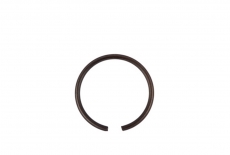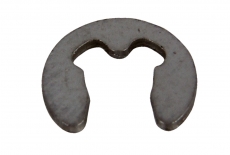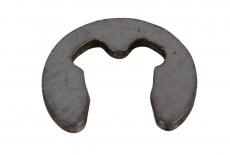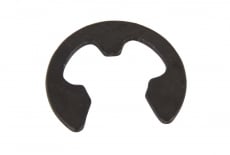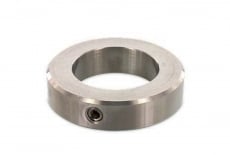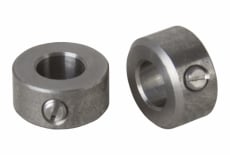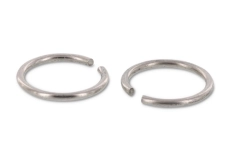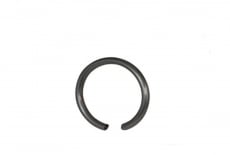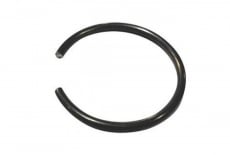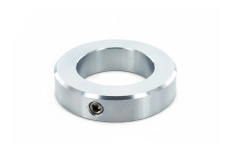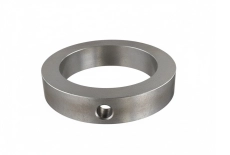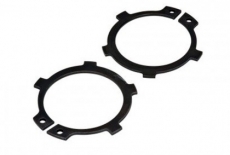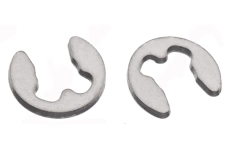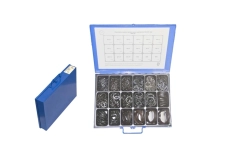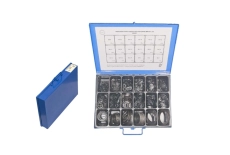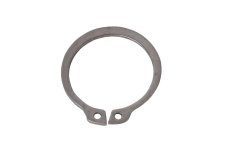


A retaining ring holds components on a shaft or inside a bore and withstands axial loads that occur during operation of an assembly. Selecting a retaining ring solely by its name or diameter is the wrong approach. First, determine where the component will be installed, measure the shaft or bore diameter, check the groove dimensions, and compare them with the relevant standard.
If the groove has already been machined, its geometry essentially determines the requirements for the ring. Trying to install a component based only on the nominal diameter often results in play, difficult installation, or damage to the groove. Therefore, a retaining ring should be selected based on the specific dimensions and operating conditions of the assembly.
External and Internal Retaining Rings
|
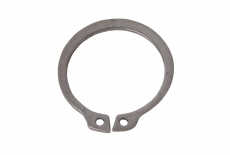
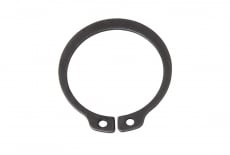
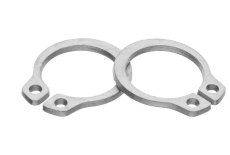
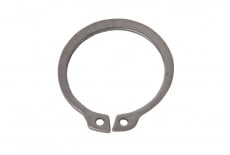
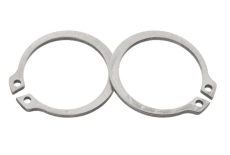
Depending on the installation location, retaining rings are divided into external and internal types. An external retaining ring is installed in a groove on a shaft. It limits the axial movement of gears, bearings, bushings, hubs, and other components. DIN 471 is widely used for standard external rings. The nominal size of such a ring corresponds to the shaft diameter for which it is designed |
.png) |
|
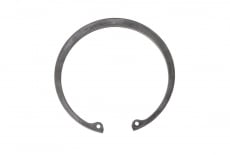
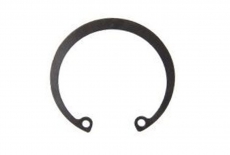
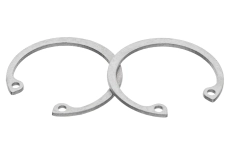
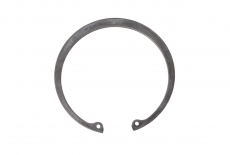
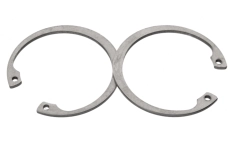
An internal retaining ring is installed in a groove inside a bore. It prevents bearings, bushings, and other components from moving axially within a housing. The basic standard for this design is DIN 472, where the ring dimensions are determined according to the bore diameter. This is a fundamental distinction when selecting a ring. An external ring operates on a shaft, while an internal ring operates inside a bore. They are not interchangeable even when they have the same nominal diameter. Also pay attention to the design of the lug holes for pliers. Special retaining ring pliers corresponding to the ring type are used for installation and removal. If the tool is selected incorrectly, the ring can be deformed before it is even installed. |
 |
For standard assemblies, it is preferable to use rings manufactured according to the relevant DIN or ISO standard rather than selecting an alternative based solely on visual similarity. The groove geometry, ring thickness, and seating diameter must correspond to each other.
How to Identify Rings by Standard
Marking helps quickly determine the ring type and its main characteristics. If DIN 471 is specified on the packaging or in the documentation, it refers to an external ring. DIN 472 applies to internal rings installed inside a bore.
The product specification may also include:
- nominal shaft or bore diameter;
- ring thickness;
- external or internal diameter;
- groove diameter;
- groove width;
- material;
- coating;
- permissible loads or other parameters.
For example, the designation of an external ring according to DIN 471 for a specific nominal diameter does not mean that it can be installed on any shaft with the same diameter. The groove must have the geometry specified by the standard.
Therefore, when purchasing a ring for a production or repair assembly, it is advisable to provide the supplier not only with the name “retaining ring” but with the complete designation: type + standard + nominal size + material/coating, if specified by the design.
If the documentation specifies DIN 471 or DIN 472, it is already clear which type of ring is required. The next step is to determine the specific nominal size and check the groove compatibility.
What to Consider When Selecting a Retaining Ring: Installation Type, Fit, and Dimensions
To select a retaining ring correctly, it is useful to go through several checks in sequence.
1. Determine the Installation Location
If the groove is located on the outer surface of a shaft, an external ring is required. If the groove is machined inside a housing bore, an internal ring is required.
2. Measure the Nominal Diameter
For an external ring, the reference dimension is the shaft diameter. For an internal ring, it is the bore diameter. A caliper is the preferred measuring tool, or another instrument with the required accuracy.
If the assembly has already been assembled, do not determine the ring size solely by measuring the diameter of the installed component. For example, a bearing may have a standard seating diameter, while the actual retaining ring groove has its own dimensions.
3. Check the Groove
For an existing assembly, this is one of the most important parameters. Measure the groove diameter, width, and depth, and also check its condition: make sure there are no burrs, deformations, or signs of wear.
The ring must sit correctly in the groove around its entire circumference. If the ring thickness does not correspond to the groove width, it may have axial play or fail to transmit the load correctly.
This is the stage where selection errors most often occur. We show in the video how to check the dimensions and correctly select a retaining ring
4. Check the Ring Thickness
The ring thickness must correspond to the groove width and the requirements of the relevant standard. Replacing it with a thicker or thinner ring can change its position in the groove and affect how axial loads are transmitted.
5. Consider the Load
A retaining ring should not be considered separately from the shaft, housing, and component it retains. Under axial load, the force is transferred through the ring to the groove. If the shaft or housing material is not strong enough, it may be the seating area rather than the ring that becomes damaged.
For assemblies exposed to high loads, vibration, or frequent reversals, the permissible parameters of the specific ring design should be checked against the technical documentation.
6. Select the Material and Coating
For standard operating conditions, spring steels with an appropriate protective coating may be used. In environments with high humidity, exposure to corrosive substances, or increased corrosion-resistance requirements, the material should be selected according to the operating conditions.
If the ring operates together with stainless steel components, do not automatically replace a steel version with a stainless steel one or vice versa. The mechanical properties and corrosion compatibility of the materials should be checked.
7. Make Sure the Ring Meets the Assembly Standard
This is particularly important in serial production. If the drawing specifies a groove according to DIN 471, using a ring manufactured to a different standard simply because it has the same nominal diameter may result in an incorrect fit.
For B2B purchasing, it is important to clarify the available diameter range, material, coating, and packaging. This helps avoid a situation where the required ring type is listed in the catalog but the specific size is not available for supply.
Selecting a Ring for an Existing Groove
For selecting a ring for an already manufactured shaft or housing, the most reliable algorithm is as follows:
- determine whether the groove is external or internal;
- measure the shaft or bore diameter;
- measure the groove width and depth;
- determine the thickness of the previously used ring, if it is available;
- compare the measured values with the table of the relevant standard;
- check the material and operating conditions;
- after selection, check the ring's compatibility with the installation tool.
If a ring needs to be ordered for the repair of serial equipment, it is advisable to keep its complete marking in the purchasing specification. This significantly simplifies repeat orders.
A presentation containing technical information on the selection of retaining rings:
.png)
Questions and Answers
How do I select a ring if the groove is already made but the marking is unknown?
First, determine the type of groove - on a shaft or inside a bore. Then measure its diameter, width, and depth. The measured values should be compared with the DIN 471 table for an external ring or DIN 472 for an internal ring.
If the dimensions do not match a standard design, do not mechanically modify the ring to make it fit. Check the assembly drawing or determine whether the groove has become worn.
Can I select a ring “by eye” without taking measurements?
For a critical assembly - no. Visually similar rings can differ in thickness, diameter, lug-hole geometry, and other parameters that determine how they work in the groove.
If the old ring is broken, it can be used for preliminary identification, but it is better to verify the dimensions and standard before placing an order.
How much load margin should be allowed when selecting a ring?
There is no single coefficient suitable for all designs. The type of load, ring material, shaft or housing material, groove geometry, frequency of impacts, and vibration must all be considered.
For critical mechanisms, the permissible load should be determined based on the technical documentation for the specific ring and an engineering calculation of the assembly. This is especially important for mechanisms subject to dynamic and alternating loads.
Does the shaft/bore material affect the selection of the ring?
Yes. The ring transfers axial force through its contact with the groove, so the strength of the seating material is important. The operating conditions will differ for a hardened steel shaft and, for example, a component made of a soft alloy.
It is also important to consider the corrosion compatibility of the materials, especially in humid environments or when dissimilar metals are used.
What should I do if the required standard size is not available?
Do not replace it with the closest size by diameter without checking the groove. First, determine whether the design allows the use of another standard size.
For serial production, it is more practical to check available alternatives with the same standard, material, and groove parameters. If the replacement affects the geometry of the assembly, it should be approved against the design documentation.
In the Dinmark fastener catalog, you can select retaining rings by type, size, and other parameters. For B2B orders, it is also advisable to check the availability of the required size and packaging in advance.